Student-Centered Learning in My Classroom

I often use student-centered learning activities in my classroom. Currently I’m teaching grade 3, that’s ages 8-9. Although many people don’t realize it, a lot of elementary school teachers already use student-centered learning approaches. Some student-centered learning activities that I’m currently using include a class blog, classroom learning centers, and KWL handouts.

I chose to start a class blog because I wanted my students to write their own thoughts out. They are accustomed to copying notes but they haven’t had much of a chance to create their own written work. I also wanted them to be held accountable for their writing. Taking responsibility for what they produced and sharing it with their classmates. It’s already been incredibly successful. After showing their first blog to the class, we discussed how we could improve our blog posts, by adding titles, using correct English conventions, and adding pictures or videos to support our stories.

Their second posts have been unbelievably better from their first. I’m so impressed with how they are taking initiative to create something original and share it with their friends. The best part about it is that they are commenting on each other’s posts and encouraging each other’s creativity! I have been able to formatively assess their writing mechanics as well as their creativity. With blogs I’m able to assess and give feedback so quickly, and the students are responding positively to any advice I offer. They are excited about sharing their ideas with their peers; they have even asked if they can write a post from home.

The second type of strategy I chose was learning centers. During our English class, I teach the class a reading or writing strategy which they are then encouraged to use to complete different tasks. The students are divided into groups and participate in a different center each day. They work collaboratively with their group to complete the task assigned. I work specifically with one group and make observational notes about the rest of the students. Students are also responsible for logging the work they’ve done. This holds them accountable and offers the teacher a formative assessment tool.

The final strategy I chose was KWL sheets. (What you Know, What you Want to Know, and What you Learned) I’ve used these sheets many times in the past. I love how they activate student prior knowledge and increase student motivation. By allowing the students to decide what they want to learn it motivates them to find the answers. I’m currently using it for a social studies unit we are doing on the Continent of Australia. It had never been easier to encourage students to write the answers (write notes) to the questions they had themselves created. Now that we’ve completed the research it will be interesting to see what facts the students choose to write in their ‘Learned’ column. I will be using that column for the summative assessment of their knowledge of the topic.

Student-Centered Learning activities are great student motivational tools. They help guide the teachers lectures, by providing critical formative assessment of the student’s understanding. I highly recommend them to anyone thinking about using them in their classroom.
Flipping the Classroom – What does that mean?

In my opinion, simply put, flipping the classroom means assigning ‘homework’; but it’s more than what the traditional sense of the word implies. Traditionally when we talk about sending work home with students it’s after we’ve taught them some new information. Then work, ‘homework’, is sent home for the student to practice the new skill or to re-enforce the learning that was taught at school. When we talk about flipping the classroom, we are still referring to sending work home; however, in this scenario the work is sent home before the new concept has been taught at school.

It’s very similar to what Universities do when they assign course readings throughout the year. University students are expected to have read the required material before class so that they can have a better understanding of the information as it’s being presented by the professor. In best case scenarios students are also encouraged to get together with their peers and discuss the reading before the scheduled class. A major difference in how flipped classrooms work these days is that the textbooks have been turned into online resources like blogs and videos. This makes it easier for students to collaborate with each other through comments and online group discussions, as well as allows the teacher to monitor the student’s comprehension of the topic.

The concept makes sense, we should always aim to activate our student’s prior knowledge before we teach them to allow for the appropriate synapses in the brain to start firing. The idea of handing them some knowledge to review before class not only stimulates what they already know, but also may add to their pre-existing knowledge which will probably lead to a more engaging class discussion, and a richer learning experience for all participants.

As stated earlier this is simply my opinion based on all the information I have heard from other educators and read on various websites; however, Wikipedia states that it’s a little more specific than what I’ve suggested. They classify the ‘flipped classroom’ as a blended learning program with the majority of the class being taught in an online setting; suggesting the classroom environment is primarily for discussions of concepts lead mostly by the students with the instructor simply guiding discussions. Which makes sense if you think about it. A typical classroom has the teacher at the front of the room teaching. When we ‘flip’ the classroom, we get the teacher at the back of the room listening.

May 12th,2015 – My teacher Eva Brown mentioned another point in class today about Flipping the Classroom that I don’t think I had completely understood or considered before. She said that flipping the classroom is about assigning work out of the classroom so that discussions in the class can be more focused on tapping into the teacher’s expertise. So the idea that the discussion in the classroom is still led by the teacher but that the monotonous, less difficult material was assigned to be learned outside of class. This gives a lot more responsibility to the students for their learning. Just a thought I wanted to add. I’m already way over my word limit on this post, but I thought this was important.

WebQuests – How useful are they for young learners?

Beginning on Friday, April 17th, I will be taking over a maternity leave for a Grade 3 teacher until the end of the year; so my teaching assignment is most likely very different from my fellow Advanced Instructional Methods classmates. However, I have still been able to find a lot of value in the tools and tips that I’ve been made aware of throughout this course, but I’m not sure WebQuests are one of them.

While browsing through the Zunal site I came across many WebQuests for all subjects matters for young learners. I was surprised to see so many, and I got very excited at the prospect of all these free resources. Unfortunately, as I quickly discovered the Webquests seemed too complicated for the learners that I’ve had the pleasure of working with. Most of the students I work with from Kindergarten to grade 3 still struggle with reading, so being able to independently work through a Webquest would be very challenging.

Another issue I faced was that there were sooooooo many resources available. It’s time consuming to look through them all and check the links to make sure the information is appropriate and up-to-date. It would probably take less time to create your own for whatever outcome you are hoping to accomplish with your students. Although this issue is not on topic with whether or not WebQuests are useful for young learners it is still a concern for teachers considering the use of WebQuests in their classroom.  *(If you’re interested in making your own WebQuest visit WebQuest.Org or Zunal.com mentioned above.)

Nevertheless, I was able to find a Webquest on counting money, and as I’m about to start a money unit with my class I thought this Webquest might be useful. Unfortunately, like most teaching resources found online with reference to money, the activities and links are all with American money; however I should be able to replace those links with my own to adapt the WebQuest for my class.

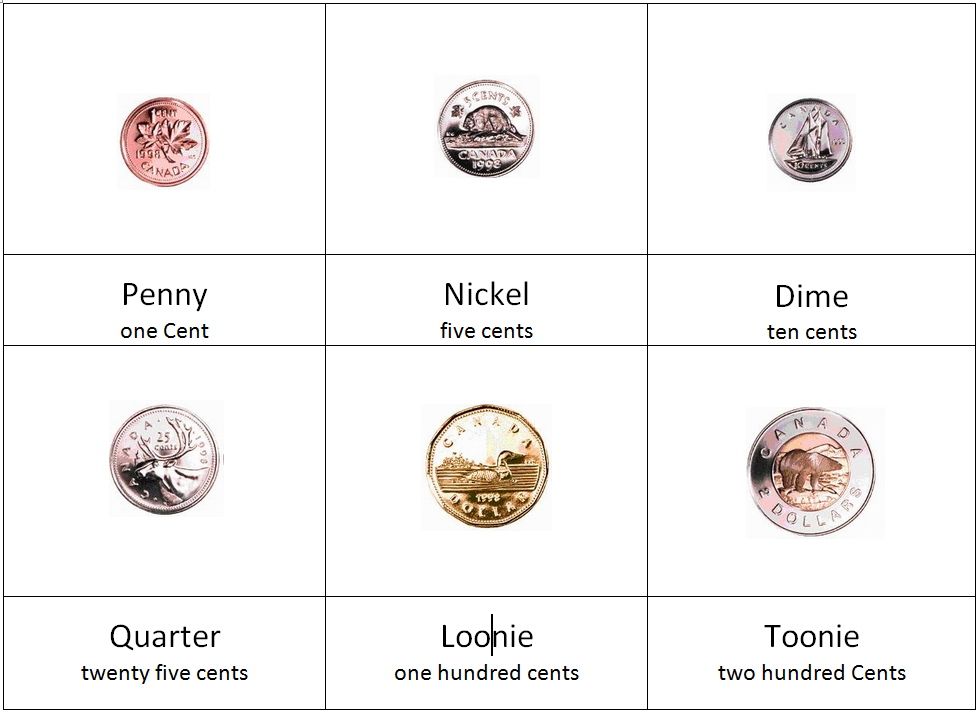
The WebQuest that I would develop would introduce money to grade 3 students. The objective would be for students to be able to identify or name the different coins and learn the number value associated with those coins. The students would listen to songs that identify the pictures on the different Canadian coins and the value of the different Canadian coins. Next, match pictures to words that identify the different coins. Finally, they would complete worksheets to show their understanding of the value of different coins.

Links that I could use:

Videos –

US Video that may be able to be used –

Images –

Worksheets –

Student-Centered Learning – A Review

I have been aware of student-centered learning for many years now and it has become the strongest belief in my teaching philosophy; so I was eager to begin this assignment to hear other, perhaps more experienced, teacher’s thoughts about the subject.

The first article I read was “What does ‘Student-Centered learning’ really mean?” ~Professor Astore

As I read the article I found my head nodding in agreement with the concepts and ideas that Professor Astore brings attention to. A commitment to learning from the student and parents is a very important factor to a student’s success, but another key ingredient is a caring, creative and dedicated teacher committed to stimulating critical, creative and ethical thinking. Whether that teacher is doing that using a chalk board or a Smart board doesn’t matter. I have been successful teaching students using both media. The point Professor Astore makes is that technology is not responsible for student learning; the questions they are being asked and the way in which they are being encouraged to search for the answers are what truly stimulates a student’s learning.

I love the parallels Astore uses between the old and new education systems. Some of the greatest thinkers are from a time when there was no internet, no technological tools such as what we use today. The great thinkers of the past were not considered so because they received high marks on standardized test scores, it was their ability to think critically that earned them recognition. ‘What of our modern-day Socrates?’ Astore questions. How are we supporting great minds, great thinkers in today’s education system? Why are parents and educational leaders so worried about standardized test scores? Do these test show true intelligence? true higher level thinking?

Ultimately Astore explains that student-centered learning is having teachers who are leaders and motivators in front of students to empower them to think critically and to stimulate their intellectual and moral growth. In other words, student-centered learning is on par with inquiry based learning. Teachers ask questions that stimulate the students so they want to find the answers, but also inspire the students to ask more questions and then encourage them to use whatever resources necessary to learn about the topic in question.

I also read a second article “5 Apps to Promote Student-Centered Learning”

I saw this article after I had already read the first article and couldn’t wait to read it to add some more tools to my teaching toolbox; however I found it not as useful as I had initially hoped. As a side note to anyone looking for online tools to help them create a more student-centered learning environment in their classroom I would recommend taking a look anyway because there might be something of interest.  The 5 Apps mentioned in the article include: Google Drive, Socrative, Polleverywhere, Voicethread and Screencast-o-matic.

Make it a great day! 🙂

Carolyn

Instructional Methods

I’ve created this blog for a course I’m taking at Red River College in Winnipeg, Manitoba.

The course is called Advanced Instructional Methods and it is the last course I have before starting my practicum to complete the CAE (Certificate in Adult Education) program. Woohoo!